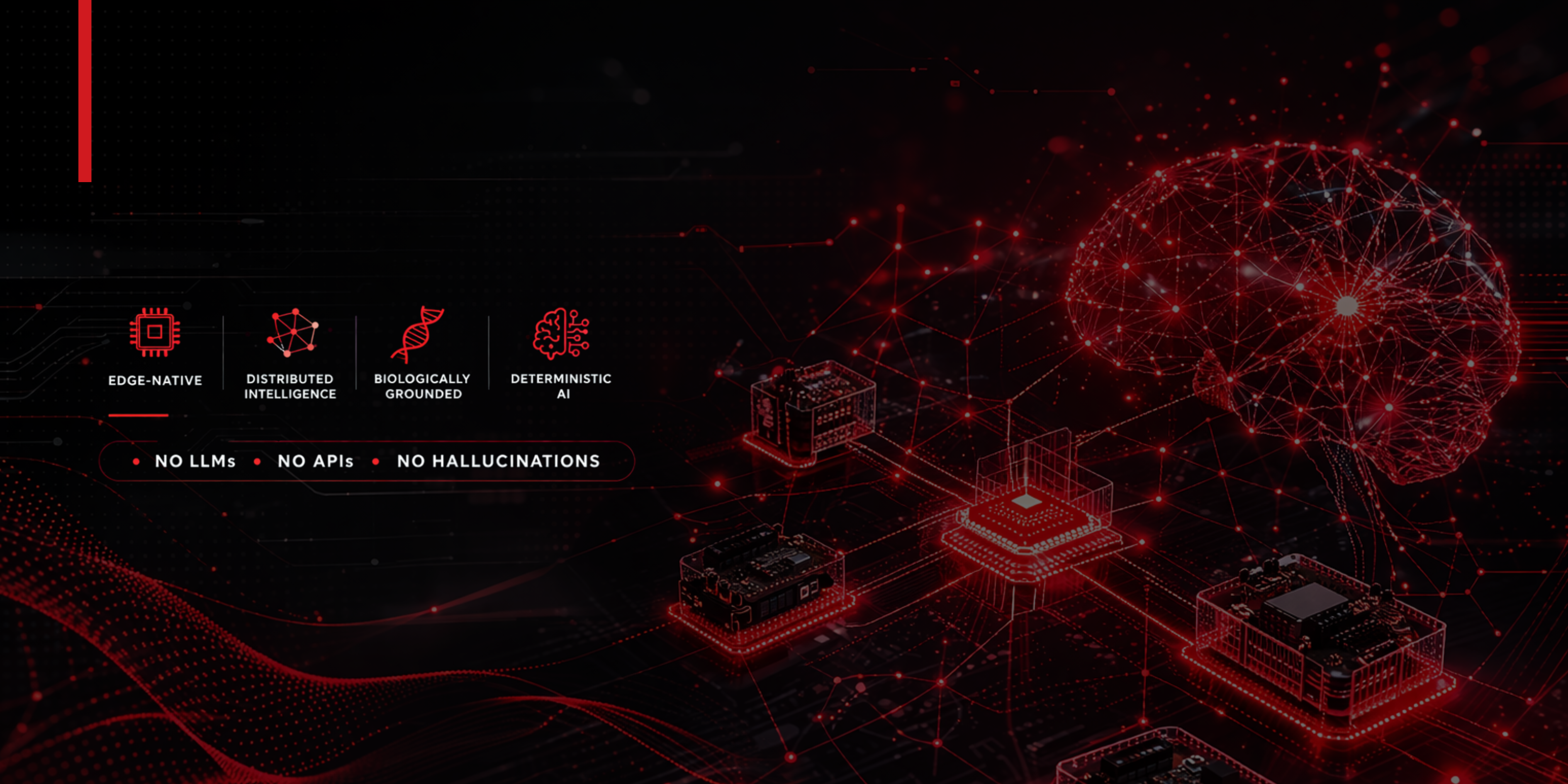


Single Board Computers (SBCs) have emerged as a powerful foundation for next-generation bioinformatics systems, particularly in environments where cloud dependency is impractical, restricted, or undesirable. SBC-based artificial intelligence allows complex biological data processing to occur directly at the edge, close to the source of data generation. This decentralized approach is increasingly aligned with modern AI in biology and bioinformatics initiatives that prioritize precision, data sovereignty, ethical governance, and real-world deployment.
Unlike cloud-centric bioinformatics pipelines that rely on continuous internet access and centralized compute infrastructure, SBC-based systems process genomic, proteomic, transcriptomic, and physiological data locally. This significantly reduces latency, minimizes data exposure, and enables consistent operation even in low-connectivity or offline environments. As a result, SBC-powered bioinformatics is becoming a critical enabler of easy, scalable, and precision-driven biological studies.
Why Non-Cloud Bioinformatics Is Increasingly Important
The rapid digitization of biology has created unprecedented volumes of sensitive data, including individual genomic sequences, disease markers, and population-level genetic variations. In many clinical, research, and regulatory contexts, transferring such data to the cloud introduces concerns related to privacy, compliance, latency, and long-term data ownership.
Non-cloud bioinformatics directly addresses these challenges by ensuring that biological data remains within the physical and legal boundaries of the organization generating it. SBC-based systems are therefore especially relevant for hospitals, diagnostic laboratories, rural healthcare centers, mobile research units, and field-based biological studies.
Advantages of SBC-Based Bioinformatics Systems
- Offline-first computation with optional and controlled synchronization
- Near real-time biological inference due to ultra-low latency
- Improved compliance with genetic and biomedical data protection regulations
- Significantly lower infrastructure and recurring operational costs
- Reliable deployment in remote, rural, and field environments
These advantages collectively make SBC-based bioinformatics a practical and sustainable alternative to centralized cloud platforms, particularly for precision studies where data integrity and contextual accuracy are critical.
Statistical Models That Power Variation and Linkage Analysis
At the core of precision bioinformatics lies statistical modeling. While AI introduces automation and predictive intelligence, statistical methods remain essential for interpreting biological variation, inheritance patterns, and molecular associations. SBC-based AI platforms integrate these classical models with lightweight machine learning techniques optimized for constrained hardware environments.
Statistical Models for Biological Variation
- Linear Models and Generalized Linear Models (GLM) for quantifying variation in gene and protein expression across samples and conditions
- Principal Component Analysis (PCA) to reduce dimensionality, identify population structure, and eliminate technical noise
- Analysis of Variance (ANOVA) for statistically comparing biological signals across experimental groups
- Hidden Markov Models (HMM) for sequence alignment, motif discovery, and probabilistic variant detection
These models are computationally efficient, interpretable, and well-suited for deployment on SBC hardware, making them ideal for on-device biological analysis.
Models for Genetic Linkage and Association Studies
- Linkage Disequilibrium (LD) statistics to study inheritance patterns and co-segregation of genetic markers
- Logistic regression for estimating disease risk and genotype–phenotype relationships
- Bayesian inference models to capture uncertainty and probabilistic dependencies between genes
- Mixed-effect models to control population stratification and environmental confounders
When combined with compact machine learning classifiers, these statistical approaches enable robust and explainable bioinformatics pipelines that function entirely at the edge.
Optimizing AI and Statistical Workloads for SBC Hardware
SBCs operate under constrained power, memory, and compute budgets, requiring careful optimization of AI and statistical workflows. Rather than performing large-scale model training, SBC-based bioinformatics focuses on efficient inference using pre-trained models and streamlined statistical evaluation.
Optimization Strategies
- Model quantization and pruning to reduce computational complexity
- Use of pre-trained biological and genomic inference models
- Batch-wise statistical computation to conserve memory
- Local caching of reference genomes, annotations, and indices
These optimizations allow SBC platforms to deliver clinically and scientifically meaningful insights without requiring cloud-scale infrastructure.
Real-World Scenario: Edge-Based Precision Genomics in a Rural Diagnostic Center
Consider a rural diagnostic center tasked with screening patients for hereditary blood disorders such as thalassemia or sickle cell disease. Internet connectivity is inconsistent, and regulatory policies prohibit uploading genetic data to external servers. A portable DNA sequencer is paired with an SBC-based bioinformatics unit deployed onsite.
Operational Workflow
- Patient DNA samples are sequenced locally
- Quality control and preprocessing occur on the SBC
- PCA identifies population-specific genetic patterns
- HMM-based methods detect sequence variations
- Logistic regression estimates disease risk
- Bayesian models generate confidence and interpretability scores
Within minutes, clinicians receive accurate, interpretable reports without relying on cloud infrastructure. This enables immediate counseling, early intervention, and improved healthcare outcomes while maintaining complete data ownership and privacy.
Key Takeaways
- SBC-based AI enables advanced bioinformatics without cloud dependence
- Statistical models remain foundational for variation and linkage analysis
- Edge AI enhances privacy, latency, and regulatory compliance
- Decentralized bioinformatics expands access to precision studies
- AI-driven biology benefits from localized, interpretable intelligence
References
1. Libbrecht, M. W., & Noble, W. S. (2015). Machine learning applications in genetics and genomics. Nature Reviews Genetics, 16(6), 321–332.
2. Min, S., Lee, B., & Yoon, S. (2017). Deep learning in bioinformatics. Briefings in Bioinformatics, 18(5), 851–869.
3. Zou, J. et al. (2019). A primer on deep learning in genomics. Nature Genetics, 51, 12–18.
4. Jumper, J. et al. (2021). Highly accurate protein structure prediction with AlphaFold. Nature, 596, 583–589.
5. Shi, W., Cao, J., Zhang, Q., Li, Y., & Xu, L. (2016). Edge computing: Vision and challenges. IEEE Internet of Things Journal, 3(5), 637–646.
6. Kairouz, P. et al. (2021). Advances and open problems in federated learning. Foundations and Trends in Machine Learning, 14(1–2), 1–210.
7. Stephens, Z. D. et al. (2015). Big data: Astronomical or genomical? PLoS Biology, 13(7), e1002195.