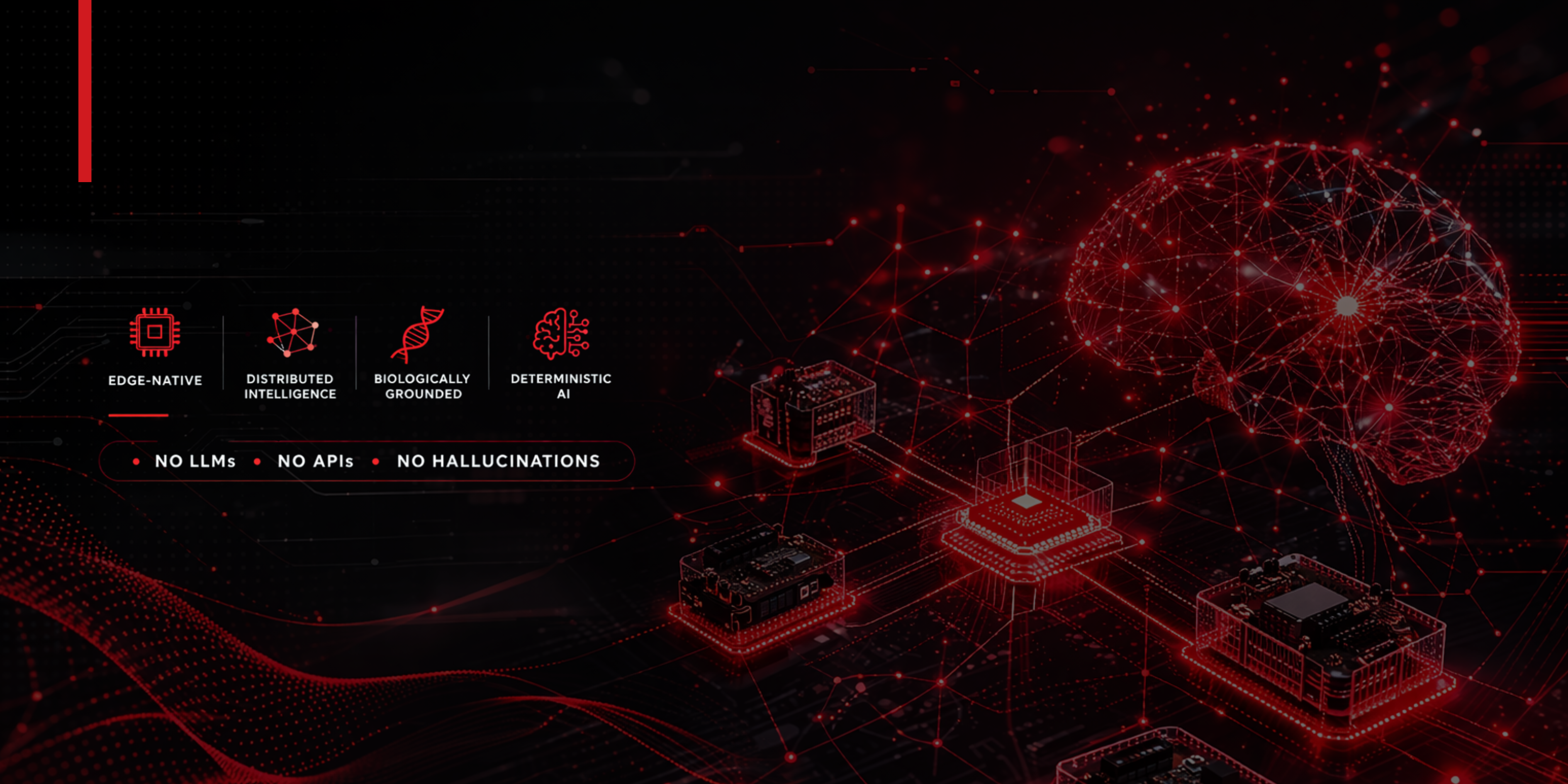
Edge AI & Single Board Computer Systems
Decentralized AI research using embedded and edge platforms
Research Areas
Clinical Edge AI System
PeachBot Med & MedAI+ is a deployable clinical edge intelligence system designed for real-time monitoring, on-device processing, and structured decision support in privacy-sensitive healthcare environments.
Supports device integration, distributed deployment, and ongoing clinical validation workflows.

Feature image source: Unsplash embedded systems hardware image
Domain Overview
Edge AI & Single Board Computer Research at PeachBot focuses on the development, optimization, and evaluation of artificial intelligence models designed to operate on decentralized, resource-constrained computing platforms.
The research investigates deployment of AI inference pipelines on single-board computers and embedded systems, enabling low-latency and reliable intelligence close to the data source. Emphasis is placed on reducing dependency on centralized cloud infrastructure.
Core research activities include model compression and optimization, hardware– software co-design, performance benchmarking, and system-level evaluation of AI behavior under real-world constraints such as limited power, memory, and network bandwidth.
This research supports applications across healthcare technology, smart agriculture, environmental monitoring, and distributed sensing systems. The work is analytical and engineering-focused and does not involve autonomous decision-making in regulated or safety-critical environments.
Research outputs include peer-reviewed publications, system architecture reports, open-source frameworks, and validated deployment workflows that contribute to advancements in edge computing and embedded AI research.
Frequently Asked Questions
Common questions about edge computing, single-board computers, and decentralized AI research systems.
1. What is Edge AI research?
Edge AI research focuses on designing artificial intelligence systems that perform data processing and inference locally on edge devices rather than relying entirely on cloud servers.
2. How are single-board computers used in this research?
Single-board computers serve as compact edge platforms for deploying, testing, and benchmarking AI models under constrained hardware and power conditions.
3. Why is edge computing important for AI systems?
Edge computing enables low-latency responses, improved data privacy, reduced bandwidth usage, and continued operation in environments with limited connectivity.
4. Does this research involve consumer or commercial products?
No. The research is system-oriented and exploratory, focusing on architecture, performance evaluation, and deployment feasibility rather than end-user products.
5. Which sectors can benefit from Edge AI research?
Research outcomes can support healthcare technology, agriculture, environmental monitoring, industrial systems, and distributed sensor networks.
6. How is ethical AI ensured in edge systems?
Ethical governance is ensured through responsible AI principles, transparency, system safety evaluation, and human-in-the-loop oversight where applicable.