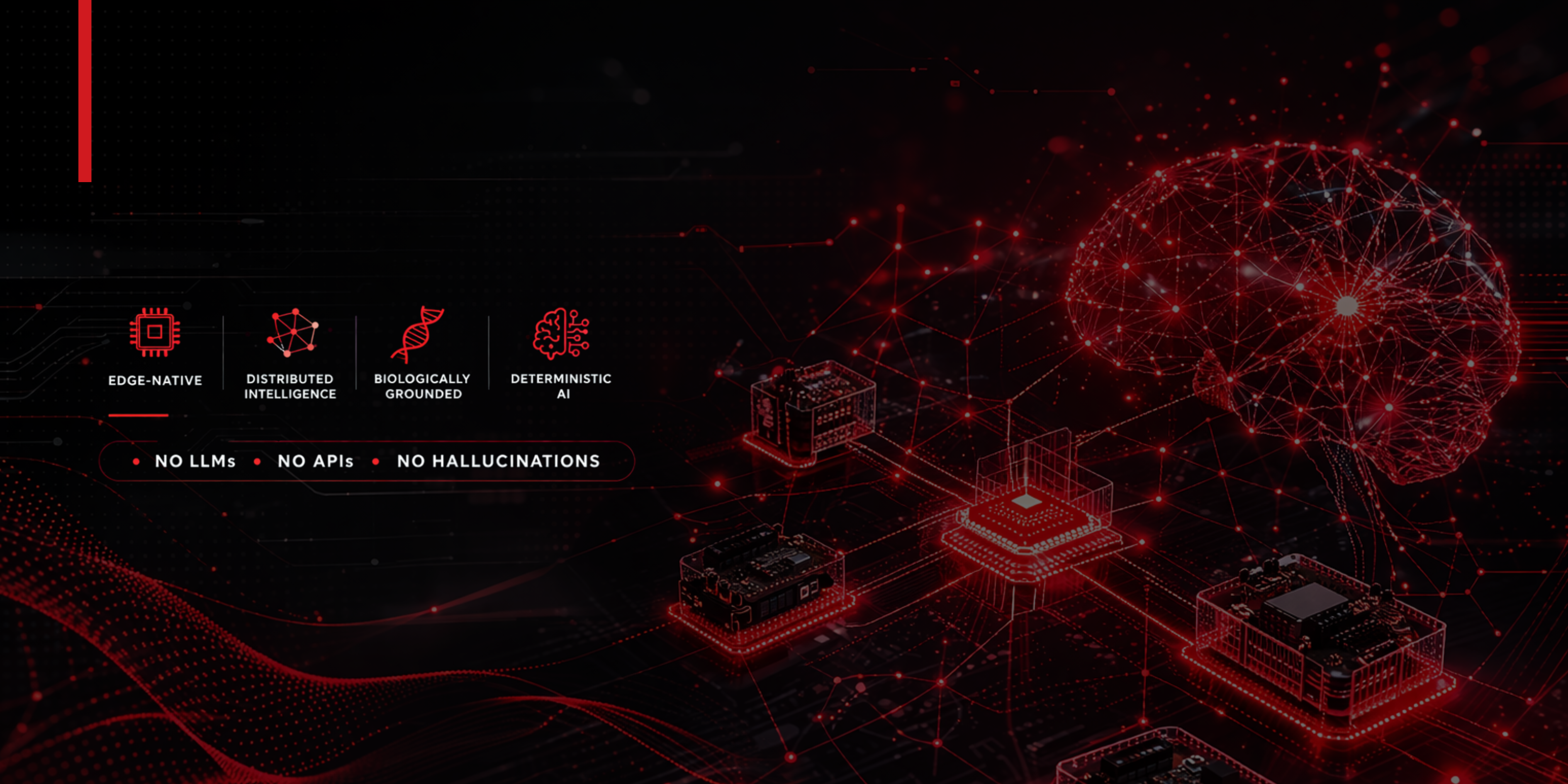


AI-aided image recognition for CT and MRI scans uses advanced machine learning and deep learning models to automatically detect, segment, and classify anatomical structures and pathologies. When these models run locally — on hospital servers, edge devices, or clinician workstations — they deliver faster inference, improved data privacy, and reliable performance even when internet connectivity is limited. This blog explains the technology, workflows, benefits, deployment considerations, and practical steps to implement robust, local AI solutions for medical imaging.
Keywords
AI CT MRI image recognition, local AI models, on-premise medical AI, edge inference medical imaging, privacy-preserving AI radiology, deep learning CT segmentation, MRI anomaly detection, federated learning healthcare, model optimization for edge, DICOM AI workflow
Why Local AI for CT and MRI Matters
Running AI models locally for CT and MRI is increasingly important for hospitals and diagnostic centers. Local deployment minimizes data transfer outside secure networks, reduces latency between scan acquisition and AI-assisted results, and ensures continuity of service in environments with unstable connectivity. For time-sensitive cases such as stroke detection on CT or acute hemorrhage identification on MRI, local inference can shave minutes off the diagnostic timeline and directly impact patient outcomes.
Core Technologies Behind Local Image Recognition
Local AI systems for medical imaging typically combine convolutional neural networks (CNNs), U-Net style segmentation models, transformer-based vision architectures, and lightweight model compression techniques. These models are trained on large annotated datasets (with DICOM metadata preserved) and then optimized for local inference using techniques like quantization, pruning, and knowledge distillation so they can run efficiently on CPUs, GPUs, or dedicated accelerators at the edge.
Clinical Workflows: How AI Integrates with CT/MRI Acquisition
An end-to-end local AI imaging workflow usually begins when a CT or MRI scanner outputs DICOM images to the local PACS. A listening service or DICOM router forwards the study to the local inference server. The optimized AI model processes the images, produces segmentations, heatmaps, or structured measurements, and writes results back as DICOM-SR, DICOM SEG, or overlay images. Radiologists access the augmented study in their PACS viewer, review AI suggestions, and incorporate them into the final report. This tight loop keeps clinicians in control while accelerating routine tasks like lesion quantification and triage prioritization.
Benefits of On-Premise AI for Radiology
Local AI deployments offer several benefits: enhanced patient data privacy since images never leave the facility; deterministic latency and predictable performance; reduced regulatory complexity in some jurisdictions; and the ability to tightly integrate with existing hospital IT (PACS, RIS, EHR). Additionally, running models locally makes it easier to maintain version control, audit model behavior, and trace inference logs for quality assurance and clinical governance.
Model Selection and Optimization for Local Inference
Choosing the right model architecture depends on the clinical use-case: U-Net variants work well for segmentation (tumor boundaries, organ masks), classification CNNs and 3D-CNNs address pathology detection, and hybrid transformer models can boost performance on complex MRI contrasts. After selection, optimization steps like 8-bit quantization, channel pruning, and compilation with inference runtimes (ONNX Runtime, TensorRT, OpenVINO) are crucial to achieve low-latency inference on the available hardware.
Data Privacy, Security, and Compliance
Local AI reduces exposure of PHI (Protected Health Information), but secure practices remain essential. Encrypt data at rest and in transit within the hospital network, enforce strict access controls and audit logging, and ensure models and inference servers comply with healthcare regulations (such as HIPAA, GDPR, or local medical device guidelines). Maintain an approval process for model updates and a documented risk assessment for each AI use-case.
Implementation Steps: From Proof-of-Concept to Production
Start with a pilot: select a narrow clinical problem (e.g., automated intracranial hemorrhage detection on CT), assemble a curated dataset, and benchmark model performance against radiologist ground truth. Validate on retrospective studies, then run a silent prospective trial where the model outputs are stored but not shown to clinicians. After clinical validation and workflow integration testing, deploy the model to a production inference node, enable DICOM routing and result export, and train radiology staff on interpreting AI outputs. Establish monitoring pipelines for model drift, inference latency, and error rates, and schedule periodic revalidation when new scanners or protocols are introduced.
Edge Hardware and Integration Options
Local inference can run on a range of hardware: standard CPU servers for light-weight models, GPU-equipped workstations for 3D models, and specialized edge accelerators (NVIDIA Jetson, Intel Movidius, Coral Edge TPU) for on-site processing in smaller clinics. Integration layers include DICOM listeners, HL7/EHR connectors, and middleware that converts AI outputs into DICOM-SR or structured JSON for downstream consumption. Choose hardware factoring throughput (studies/hour), model complexity, and site IT constraints.
Evaluation Metrics and Clinical Validation
Robust evaluation uses clinically meaningful metrics: sensitivity and specificity for detection tasks, Dice or IoU for segmentation quality, and time-to-triage for operational impact. Equally important is clinician acceptance testing — does the AI reduce reading time, increase confidence, or help prioritize critical cases? Maintain a feedback loop where radiologists report false positives/negatives and those examples are incorporated into continuous retraining or model improvement cycles.
Challenges and Practical Solutions
Challenges include variability in scanner models and protocols, limited labeled data for specific pathologies, and the complexity of sustaining on-premise infrastructure. Solutions involve using domain adaptation, transfer learning from multi-center datasets, smart augmentation strategies, and lightweight MLOps practices for patching, model versioning, and rollback. For small centers, hybrid models that perform sensitive preprocessing locally and optionally sync anonymized features for centralized model improvement can balance privacy with continuous learning.
Real-World Use Cases
High-impact applications already feasible with local AI include acute stroke detection on non-contrast CT, automated lung nodule detection on chest CT, tumor segmentation for radiotherapy planning on MRI, and vertebral fracture screening. These use-cases benefit from fast turnaround and direct integration with treatment pathways, enabling earlier intervention and improved care coordination.
Future Directions: Federated Learning and Explainability
Federated learning allows multiple institutions to collaboratively improve models without sharing raw imaging data — a natural complement to local inference architectures. Explainability and uncertainty estimation techniques will make AI outputs more interpretable for clinicians, showing which image regions influenced decisions and offering calibrated confidence scores. Combined, these advances will make local AI both safer and more trustworthy in clinical practice.
Conclusion
AI-enabled CT and MRI image recognition that runs locally transforms diagnostic workflows by delivering low-latency results, protecting patient privacy, and integrating seamlessly with hospital systems. Successful implementation requires careful model selection, hardware planning, clinical validation, and ongoing monitoring. When designed responsibly and deployed within clinical governance frameworks, local medical AI can boost diagnostic accuracy, shorten time-to-treatment, and ultimately improve patient outcomes.